
For many Nepalis working in the Gulf countries, Malaysia, the USA, Australia, and Europe, sending money home is a regular part of managing finances for their families. Instead of collecting remittances in cash, the money can also be credited directly to a bank account in Nepal.
Receiving remittances through a bank account can make the money easier to manage and may also provide additional benefits. Eligible remittance accounts, for example, can offer higher interest rates and reserved shares in IPOs.
So, how can remittances be transferred directly to a bank account in Nepal? This guide explains the available methods, the steps involved, the details required, and how to get more value from a remittance account.
Receiving remittance directly in a bank account can offer more than just convenience. It can also make the money easier to access, manage, and save.
When remittance is credited directly to a bank account, the recipient does not need to collect and carry a large amount of cash. This can reduce the risks associated with handling physical cash and make the money easier to manage.
Once the remittance is credited to the recipient's bank account, the money can be accessed through the bank's available services. It can be withdrawn, transferred, or used for digital payments without needing to collect cash separately.
Money received directly in a bank account can be kept as savings or used for other financial needs without first handling cash. For families that regularly receive remittances, this can also make it easier to track and manage the money they receive.
Nepal Rastra Bank has introduced provisions that provide additional benefits to eligible remittance accounts, including higher interest rates and reserved shares in IPOs. Choosing an eligible remittance account can therefore help recipients get more value from the money they receive.
Remittance can be transferred directly to a bank account in Nepal through different channels. The right option depends on the sender's country, preferred transfer method, and the services available to them.
Digital money transfer services allow senders to initiate remittance through a mobile app or website and have the money deposited directly into a bank account in Nepal. Depending on the service and sending country, the sender may be able to pay through a bank account, debit card, or other supported payment method.
Money transfer operators and exchange houses are another common way to send remittances, particularly for Nepalis working in the Gulf and other countries with established remittance networks.
The sender can visit a branch or agent, provide the required details, and request the money to be deposited directly into the recipient's bank account. Nepal Rastra Bank licenses and regulates remittance companies operating in Nepal.
Money can also be sent directly from a foreign bank account to a bank account in Nepal through SWIFT. The sender generally needs the recipient's account details and the receiving bank's SWIFT code, along with any other information required by the banks involved.
Nepal Rastra Bank also confirms that funds sent through SWIFT can be credited to the recipient's account at the relevant bank or financial institution.
Some Nepali banks offer dedicated remittance services or work with international remittance partners to facilitate transfers into their customers' accounts. These services can be useful when the sender or recipient prefers a particular bank or wants to use one of its associated remittance channels.
The exact process can vary depending on the country, remittance provider, and transfer method. However, most direct-to-bank remittance transfers follow these general steps.
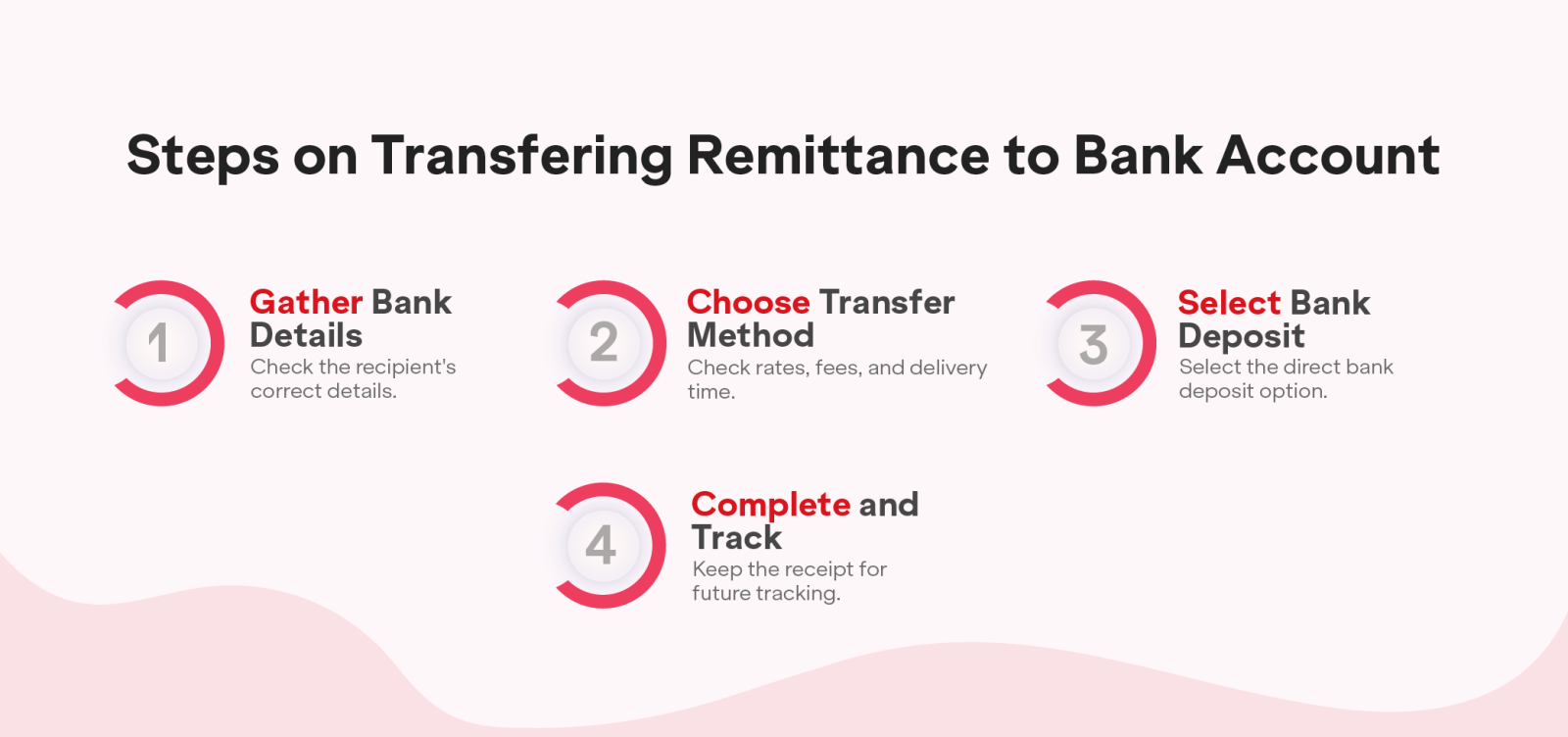
Before starting the transfer, keep the recipient's bank and personal details ready. These may include:
Make sure the recipient's name and account details are entered correctly. The name may need to match the details registered with the bank or the identification document, depending on the provider's requirements.
Choose a remittance app, online transfer service, exchange house, money transfer operator, or bank transfer based on what is available in the sender's country.
Before confirming the transfer, compare the exchange rate, transfer fee, and expected delivery time. A provider offering a lower fee may not always offer the best overall value if its exchange rate is less favorable.
When choosing how the recipient will receive the money, select Bank Transfer, Account Deposit, or a similar option instead of Cash Pickup.
Enter the recipient's bank account details carefully and review them before proceeding.
Complete the payment using the method supported by the selected provider. This may include a local bank account, debit or credit card, or cash at a physical counter.
After the transfer is completed, save the receipt and transaction reference number. Some providers may issue a control number, Money Transfer Control Number (MTCN), or another tracking number that can be used to check the status of the transfer.
Sending remittance directly to a bank account makes it easier to manage the money, but the choice of account also matters. Instead of keeping the money in a regular savings account, eligible remittance accounts can offer additional benefits, including higher interest rates.
A Remittance Savings Account is designed for Nepali citizens working abroad and receiving money through formal remittance channels. Nepal Rastra Bank has a provision requiring banks and financial institutions to provide at least one percentage point additional interest on eligible remittance accounts compared with their regular deposit rates.
Eligible remittance account holders can also qualify for the reserved IPO quota for Nepalis working abroad, subject to the applicable requirements. This makes a remittance savings account worth considering for those who regularly send money home and want to keep part of it as savings.
Want to earn more from your savings? Compare the latest Remittance Savings Account interest rates and choose an account that suits your needs.
If you have accumulated remittance savings that you do not need for your regular expenses, a Remittance Fixed Deposit (FD) can be an option for earning interest over a fixed period. The interest rate varies by bank and deposit tenure, so comparing available rates can help you find a suitable option.
A fixed deposit also keeps the money committed for a specified period, although banks may allow loans against deposits subject to their terms and conditions.
Looking to earn interest on your foreign earnings? Compare the latest Remittance Fixed Deposit rates across banks in Nepal before choosing a deposit.
A remittance transfer can take longer than expected when the information provided during the transaction does not match the recipient's bank records or when additional verification is required. Checking the details before sending can help avoid unnecessary delays.
Spelling differences in the recipient's name, missing names, or incorrect account details can cause issues during verification and processing. Always enter the recipient's name and bank account details exactly as required by the remittance provider and the receiving bank.
If the intention is to credit the money to a bank account, make sure Bank Deposit, Account Deposit, or the relevant direct-to-bank option is selected. Choosing Cash Pickup means the recipient will need to collect the money through the provider's designated payout channel instead of having it credited directly to their bank account.
Larger or unusual transactions may require additional verification depending on the remittance provider and receiving bank. If the sender or recipient's required identification or KYC details are incomplete or outdated, the transfer may take longer to process. Keeping the relevant details updated can help avoid such delays.
Sending remittance directly to a bank account can make it easier to receive, manage and save the money sent home. By choosing the right transfer method and providing accurate bank details, recipients can avoid common issues and access their funds through regular banking services.
For Nepalis working abroad, choosing an eligible Remittance Saving Account can also provide additional benefits, including the applicable additional interest rate and reserved IPO quota. If you have savings that you do not need immediately, a Remittance Fixed Deposit can be another option to consider for earning interest over a fixed period.
The goal is not just to send money home, but to make the most of the money you have worked hard to earn. Before your next transfer, compare Remittance Savings Account and Remittance Fixed Deposit rates across banks to find an option that suits your needs.
The time depends on the remittance provider, sending country, transfer method, and receiving bank. Some transfers may be credited quickly, while others can take longer due to processing, verification, or banking hours.
The required documents depend on the bank and account type. Generally, the account holder may need valid identification and other documents required by the bank, along with proof of employment or foreign employment-related documents where applicable.
Some Nepali banks allow eligible Nepalis working abroad to open or apply for remittance-related accounts remotely or through their available digital channels. The process and requirements vary by bank, so it is best to check with the specific bank before applying.
A difference in the recipient's name can cause verification or processing issues, depending on the remittance provider and receiving bank. If there is a mismatch, contact the relevant provider or bank and confirm what correction or additional verification is required.
Remittance received from abroad is generally treated differently from income earned in Nepal. However, tax obligations can depend on the nature and source of the money and the individual's circumstances. For specific tax matters, check the latest rules from the Inland Revenue Department or consult a tax professional.
Yes, if the remittance is credited to a bank account held by the family member, they can use the funds according to the account's normal terms and available banking services. The sender does not generally need to be physically present in Nepal for the recipient to access money credited to their own account.
A Remittance Saving Account is designed for eligible Nepalis receiving money through remittance channels. Depending on applicable rules and the bank's product terms, it can provide additional benefits such as higher interest rates compared with regular savings accounts and eligibility for the reserved IPO quota for Nepalis working abroad.
Nepalis working abroad can apply for the reserved IPO quota if they meet the applicable requirements. These generally include having a valid labor approval and receiving remittance through the required formal banking channel. Specific requirements may vary according to the issue and prevailing rules.