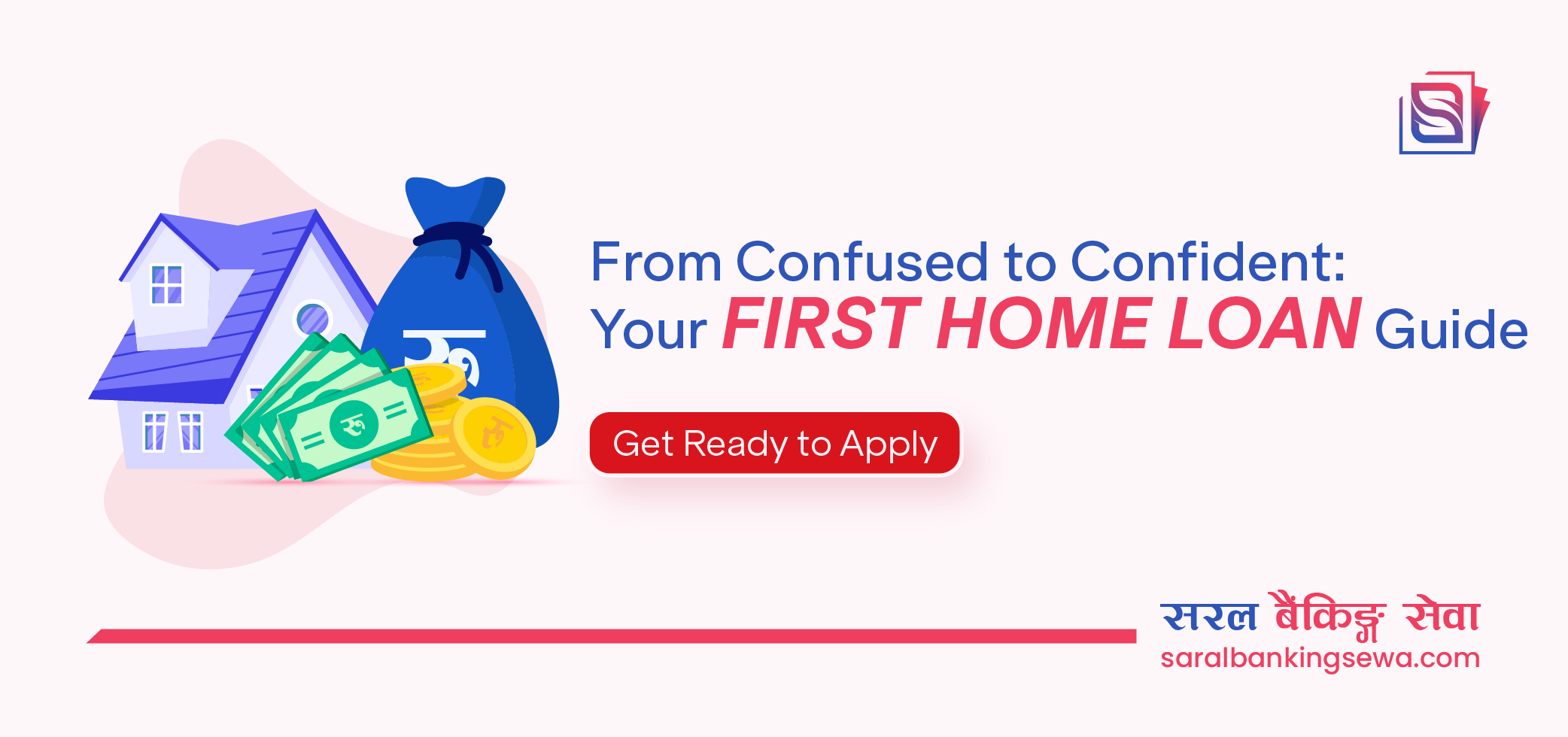

Buying a home is one of the biggest financial decisions you will ever make, and choosing the right home loan is just as important. One of the first decisions you will face is whether to choose a fixed or floating interest rate. While both options can help you finance your dream home, they work differently and can seriously impact your monthly EMI, the total interest you pay, and the overall cost of your loan over time.
For many first-time homebuyers in Nepal, understanding the difference between these two interest rate options can be confusing. Should you choose the certainty of a fixed rate, or take advantage of a floating rate that changes with market conditions? The answer isn’t the same for everyone.
The right choice depends on several factors, including your income stability, financial goals, risk tolerance, loan tenure, and the direction of interest rates in the market. Understanding how each option works can help you avoid unexpected costs and make a more informed borrowing decision.
In this guide, we will explain the key differences between fixed and floating home loan interest rates, explore the advantages and drawbacks of each, discuss when each option may be the better fit, and share practical tips to help you choose the one that best matches your financial needs.
A fixed home loan interest rate stays the same for a specified period, or in some cases, throughout the entire loan tenure-depending on the lender’s policy. Since the interest rate doesn’t change, your monthly EMI also usually remains the same during the fixed rate period, making it easier to budget and plan your finances.
A fixed rate also protects you from rising interest rates during the fixed-rate tenure, as changes in market rates do not affect your agreed interest rate during that period. However, the interest rate offered for a fixed-rate loan may be higher or lower than a floating-rate option, depending on the lender, loan product and prevailing market conditions.
A floating home loan interest rate can change over time based on the lender's applicable benchmark, such as the base rate, and the terms of the loan. In Nepal, floating rates are commonly linked to the bank's base rate plus a premium or spread. When the applicable rate changes, your EMI, loan tenure, or both may change depending on the lender's policy.
If market interest rates fall, you can benefit from lower borrowing costs. However, if rates rise, your loan repayments may also increase. Floating rates may appeal to long-term borrowers who are comfortable with interest-rate changes and want the opportunity to benefit when rates fall.
Both fixed and floating home loan interest rates have their own advantages. The right choice depends on your financial goals, risk tolerance, and preference for payment stability. Understanding how they differ can help you choose the option that best suits your needs.
| Feature | Fixed Rate | Floating Rate |
| Interest rate | Remains fixed for the agreed period | Changes with market rates |
| EMI | Usually remains the same | May increase or decrease |
| Protecting from rising rates | Yes | No |
| Benefit when rates fall | No | Yes |
| Predictability | High | Lower |
| Best suited for | Borrowers who prefer stable EMIs | Borrowers comfortable with changing EMIs |
Comparing fixed and floating rates? Use Saral Banking Sewa’s Loan EMI Calculator to estimate your monthly payments and see how different loan amounts, interest rates, and tenures could affect your budget.
For a standard EMI-based loan, the EMI generally remains unchanged while the interest rate is fixed, provided there are no other changes to the loan. This makes it an excellent choice for borrowers who value predictable repayments and want better control over their finances.
Some Key advantages of a fixed home loan rate include:
Keep in mind that fixed-rate home loans often come with slightly higher interest rates than floating-rate loans at the time of borrowing, as you are paying for the stability and predictability they provide.
A floating home loan interest rate gives borrowers the opportunity to benefit from changes in market interest rates. If lending rates decrease, your borrowing cost may also reduce, making a floating-rate loan an attractive option for those comfortable with some uncertainty.
Some key advantages of a floating home loan rate include:
However, it’s important to remember that floating rates can also move upward. If market interest rates rise, your EMI or loan tenure may increase, so borrowers should be prepared for changes in their repayment obligations.
A fixed home loan interest rate can be a good choice if you value stability and want your loan repayments to remain predictable. It is especially suitable for borrowers who prefer financial certainty over changing interest rates.
A fixed home loan may be right for you if you:
While a fixed-rate loan offers greater peace of mind, the right choice ultimately depends on your financial goals, repayment capacity and your lender’s loan terms.
A floating home loan interest rate may be a good option if you are comfortable with some uncertainty in exchange for the potential to save on interest when market rates fall. It is often preferred by borrowers who have the flexibility to adjust to changing loan repayments.
A floating rate home loan may be suitable if you:
A floating rate loan can help reduce your overall borrowing cost when market conditions are favorable. However, before making a decision, consider your financial goals, repayment capacity, and ability to manage changes in interest rates.
Choosing between a fixed and floating home loan interest rate involves more than simply comparing interest rates. Your financial situation, repayment capacity and future plans all play an important role in determining which option is the better fit.
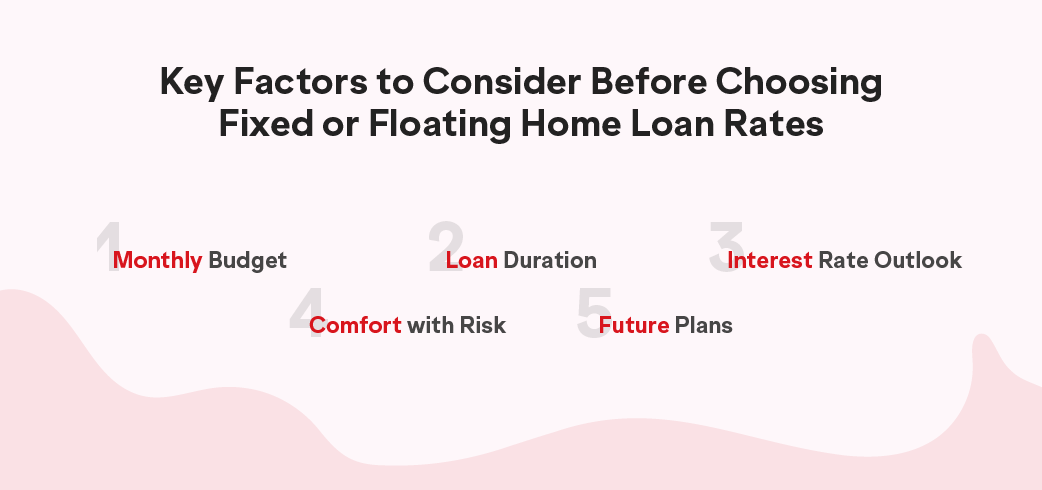
Start by evaluating your monthly income and expenses. If you have a stable income and prefer predictable repayments, a fixed rate loan may be more suitable. If your income is more flexible and you can manage occasional changes in your EMI, a floating rate loan could be a good option.
The length of your loan also matters. For short-term loans, the difference between fixed and floating rates may be less significant. For long-term loans, floating rates may offer savings if interest rates decline over time, but they also come with the risk of higher repayments if rates increase.
Understanding the current interest rate environment can help you make a more informed decision. If interest rates are rising, a fixed rate can provide protection during the fixed-rate period. If rates are stable or fall, a floating rate may allow you to benefit from lower borrowing costs.
Think about how comfortable you are with uncertainty. Some borrowers prefer the certainty of fixed EMIs, while others are willing to accept market fluctuations for the possibility of lower interest costs.
Consider any major life changes that could affect your finances, such as career moves, starting a business, getting married, or expanding your family. Choosing a home loan that aligns with your future financial plans can make repayments more manageable in the years ahead.
Some lenders may allow borrowers to switch between fixed and floating rates, subject to the loan agreement, eligibility conditions and applicable charges. This can be helpful if your financial needs change or if market interest rates make another option more attractive.
However, conversion policies, eligibility requirements and applicable fees vary from one lender to another. Some lenders may charge a conversion fee or have specific conditions before allowing the switch.
Before making a decision, talk to your lender to understand the conversion charges, terms and eligibility criteria. Comparing the costs and potential savings can help you decide whether switching your home loan interest rate is the right move.
When choosing a home loan, many borrowers focus only on the interest rate. However, the lowest rate doesn’t always mean the lowest overall borrowing cost. Avoiding these common mistakes can help you make a smarter financial decision.
Taking the time to compare lenders, understand the loan terms, and evaluate your long-term financial situation can help you choose a home loan that best fits your needs.
Choosing between a fixed and floating home loan interest rate is an important decision that can affect your monthly EMI and the overall cost of your loan. While a fixed rate offers stability and predictable repayments, a floating rate provides the opportunity to benefit from favorable market interest rate changes. Both options have their own advantages, and the right choice depends on your financial goals, income stability, loan tenure, and comfort with changing interest rates.
Before making a decision, take the time to compare home loan offers from different banks and lenders. Look beyond the advertised interest rate by reviewing the complete loan terms, including processing fees, repayment flexibility, loan tenure, prepayment or conversion charges, and the total repayment cost over the life of the loan.
Compare before you borrow. Evaluating both fixed and floating interest rate options can help you choose a home loan that aligns with your financial needs today and supports your long-term goals.
Check your home loan eligibility before you apply
Not sure how much you may be eligible to borrow? Take a quick Loan Eligibility Test to get an estimate of how much can you borrow before you start your application.
A fixed home loan interest rate remains the same for a specified period, resulting in stable EMIs. A floating interest rate changes based on market conditions, so your EMI or loan tenure may increase or decrease over time.
Neither option is universally better. A fixed rate is ideal for borrowers who want predictable repayments, while a floating rate may suit those who are comfortable with changing EMIs and want to benefit if interest rates fall.
Yes, Many lenders allow borrowers to switch between fixed and floating interest rates. However, eligibility, conversion charges and terms vary by lender, so it’s important to check the loan conditions first.
No. A floating rate does not necessarily change every day or every month. The rate changes according to the lender's applicable rate-setting or review mechanism. It may remain unchanged for a period even when market conditions are stable.
Fixed-rate home loans often have slightly higher initial interest rates than floating-rate loans because they provide protection against future interest rate increases.
A fixed rate may appeal to first-time homebuyers who want predictable repayments and easier budgeting. However, the better option depends on the borrower's income, repayment capacity, risk tolerance and the lender's terms.
You can compare home loan interest rates, features, and offers from different banks in Nepal through Saral Banking Sewa's home loan rate comparison tool.
For floating-rate home loans, changes in interest rates may increase or decrease your EMI or loan tenure, depending on your lender's policy. Fixed-rate home loans generally keep the EMI unchanged during the fixed-rate period.
Consider your monthly budget, income stability, loan tenure, current interest rate trends, future financial plans, and your comfort with changing EMIs before making a decision.
A floating-rate home loan involves more uncertainty because interest rates can rise or fall. While it offers potential savings when rates decrease, borrowers should also be prepared for higher repayments if rates increase.
Compare offers from multiple lenders, understand the complete loan terms, estimate the total repayment cost, and choose the option that best matches your financial goals, repayment capacity, and risk tolerance.