

Have you ever avoided checking your own credit score just because someone warned you it might lower it? Or been told that opening multiple bank accounts makes you look “risky” to lenders? These are two of the most common credit score myths in Nepal.
In reality, your credit score simply shows how responsibly you have handled borrowed money, things like timely EMI payments and your overall repayment history. In Nepal, this record is maintained by the Credit Information Bureau (CIB), and banks depend on it when deciding whether to approve your loan or credit card application.
Not everything people believe about credit scores is true, though. Many “rules” passed down through word of mouth are simply myths, while some habits that genuinely hurt your score often go unnoticed.
In this guide, we'll clear up the confusion by covering how credit scores work in Nepal, the most common myths, what actually affects your score, and practical tips to keep your credit profile healthy.
A credit score is a numerical representation of your creditworthiness, a quick snapshot of how responsibly you have borrowed and repaid money in the past. In Nepal, this number comes from the CIB, which tracks your repayment history across banks.
If you're curious about exactly how this number is calculated, we've broken it down in detail in our article on how a credit score is calculated in Nepal.
Lenders review your credit score because it helps them quickly assess risk: will you pay back what you borrow on time? This one number influences several key financial decisions:
A healthy credit profile simply keeps more financial doors open. That said, lenders don’t rely on your score alone; income, employment stability, existing debts, and collateral all factor into the final decision.
Credit scores can feel like a bit of a mystery. The exact formulas banks and the CIB use aren’t spread out publicly in full detail, so people naturally fill in the gaps with guesswork, and guesswork is where myths are born.
A lot of this misinformation also comes from advice borrowed from Nepal’s system, with its own scoring ranges, rules, and reporting practices. Since every country has its own credit regulations, reporting practices, and scoring models, advice that applies elsewhere may not be accurate for Nepal, but the advice gets passed along anyway, often without anyone checking if it actually fits Nepal’s system.
The trouble is, trusting this kind of misinformation isn’t harmless. It can lead to unnecessary financial stress, making people avoid useful actions like checking their own score or hesitate over decisions that would have posed no risk at all. Understanding what’s actually true is the first step to borrowing and managing credit with confidence.
Not everything you hear about credit score is true. Many “rules” people swear by are simply myths that have spread through word of mouth over time. Let’s break down some of the most common ones.
Reviewing your own credit information generally does not negatively affect your score. This is one of the most persistent myths out there, and it stops people from doing something genuinely useful: keeping an eye on their own financial records.
Regularly checking your credit report helps you spot errors or suspicious activity before they become bigger problems. Staying informed about your credit profile is simply a responsible financial habit, not a risky one.
Never having borrowed money doesn’t automatically mean you have a strong credit profile. In fact, lenders often prefer to see evidence of responsible borrowing and repayment; it shows them you can handle credit well.
Without a credit history, lenders have limited information to assess how responsibly you manage borrowed money. A record of timely repayments can show that you are a reliable borrower, while having no history may make it harder for lenders to judge your credit risk.
Repayment history is one of the most important factors lenders consider, and even a single missed or late payment can affect your credit profile. It might seem minor in the moment, but these details add up over time. Setting reminders or opting for automatic payments can go a long way in avoiding this altogether.
Credit scores are built over time, not overnight. While repaying a loan on time can contribute positively, a strong credit profile usually comes from a consistent record of responsible financial behaviour. Your repayment history, credit usage, length of credit history, and other factors can all influence your overall credit profile.
A high income doesn’t automatically translate into a high credit score. Lenders are far more focused on how responsibly you manage your credit obligations, whether you pay on time, how much debt you are carrying, and your repayment consistency. In most cases, your repayment behavior matters more than how much you earn.
A loan rejection doesn’t necessarily mean your credit score is poor. Applications can be turned down for several reasons, including:
Your credit score is just one part of a much larger evaluation process.
Creditworthiness is based on your overall financial behaviour, not simply how many accounts you open or close. Aggressively closing accounts doesn’t automatically boost your score; what matters more is how responsibly you have managed those obligations over time.
Credit profiles typically change gradually, as lenders update your repayment information over time. There is no quick fix; building a stronger credit profile comes down to consistent financial discipline. Rather than looking for shortcuts, it’s worth focusing on steady, long-term habits.
While many credit score myths exist, some financial behaviors genuinely do affect your credit profile. Understanding these can help you avoid the mistakes that actually matter.
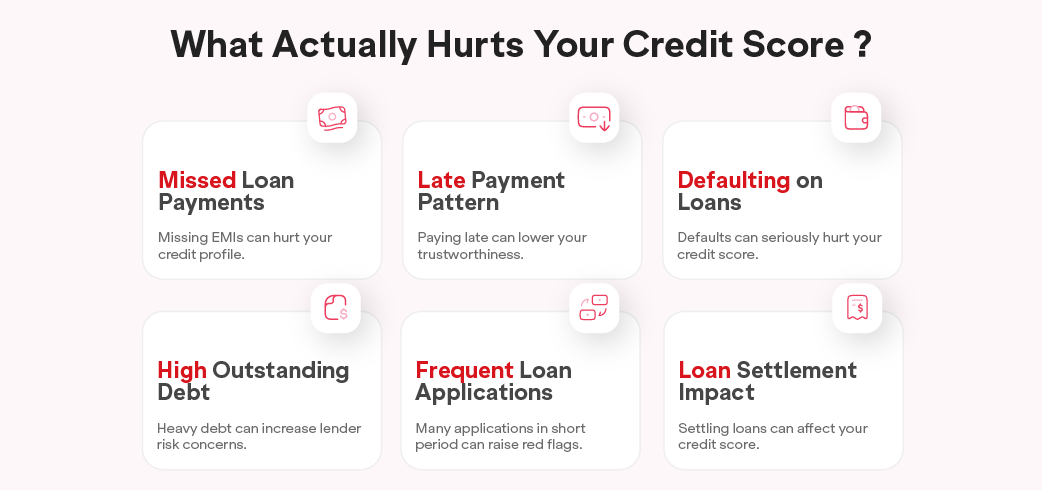
Payment history is one of the biggest factors in your credit profile; it tells lenders whether you honor your commitments. A single missed payment can leave a mark, but repeated missed payments send a much stronger signal of unreliability, making it harder to secure favorable terms on future loans.
Even if you eventually pay, doing so consistently late can chip away at your creditworthiness. Frequent delays suggest a pattern rather than a one-off slip, and lenders take note of patterns far more than isolated incidents.
A loan default is one of the most serious dents to your credit profile. It signals to future lenders that you weren’t able to meet your repayment obligations, which can significantly limit your borrowing opportunities or lead to much stricter terms down the line.
Carrying large debt obligations relative to your income can make lenders view you as a higher-risk borrower. Even if you are managing payments fine, a heavy debt load can affect how much additional credit a lender is willing to extend.
Applying for multiple loans within a short timeframe can raise red flags. It may suggest financial strain or overreliance on credit, prompting lenders to look more closely or more cautiously at your application.
Settling a loan means paying a negotiated, reduced amount instead of the full outstanding balance, and it’s not the same as repaying in full. While a settlement may resolve the immediate debt, it can carry loan term implications for your credit profile. It’s worth fully understanding the consequences before agreeing to settle rather than repay.
Some actions people worry about don't actually carry the negative impact they assume. Reviewing your own credit report, for instance, is a healthy habit; it helps you catch errors and stay informed before applying for a loan.
Comparing loan options across banks before committing is simply smart shopping, and successfully repaying a loan reflects positively on your profile rather than something to be cautious about.
Everyday habits like budgeting, saving, and reviewing your account statements regularly also support your financial health, helping you stay on top of due dates and avoid oversights that could lead to missed payments.
Since lending policies can vary between institutions, it's always best to confirm specifics with a trusted bank rather than relying on assumptions.
Improving your credit profile isn’t about quick fixes; it comes down to a handful of simple, consistent financial habits. For a more in-depth dive into specific strategies, check out our detailed guide on how to improve your credit score in Nepal. Here are the habits that matter most.
This is the single most important habit you can build. Set up calendar reminders or enable auto-ebit for your EMIs to ensure you never miss a due date, even during busy months.
Before taking on a loan, honestly assess your monthly income and expenses. For example, if a new EMI would stretch your budget too thin, it’s often better to borrow a smaller amount or extend the tenure rather than overcommit.
Checking your credit report every few months helps you catch errors like a loan that was actually closed but still shows as active before they affect your applications down the line.
Keeping copies of loan agreements, payment receipts, and closure letters can be invaluable if a dispute ever arises with a lender or if you need to prove a payment was made on time.
Just because you are eligible for a loan or a higher credit limit doesn’t mean you should use it. Taking on debt only when genuinely needed keeps your obligations manageable and your profile healthier.
If you know you will struggle to make a payment, reach out to your bank before the due date rather than after. Many lenders offer restructuring options or temporary relief, but they’re far more willing to help when you’re upfront about the situation early.
Sometimes, your financial habits give you clues long before a lender does. Recognizing these signs early can help you take corrective steps before they become bigger obstacles.
Repeated loan rejections or difficulty qualifying for credit products can be a sign that your credit profile needs attention; it's worth reviewing your credit report and strengthening your repayment history. Frequently missing EMI or bill due dates is another cue to rethink your payment system, whether through reminders, automation, or a revisited budget.
Carrying high debt obligations relative to your income, or feeling financial stress from borrowing, are also signs worth acting on. Reviewing your total obligations and reaching out to your lender early can go a long way. The good news is that credit health isn't fixed; with consistent effort, it can be steadily rebuilt over time.
Many commonly shared beliefs about credit scores in Nepal are simply myths, from thinking a check lowers your score to assuming rejection means poor credit. Knowing what's actually true puts you in a better position to make smart financial decisions.
Strong creditworthiness comes down to a few consistent habits: paying on time, borrowing responsibly, managing debt carefully, and sticking with healthy financial practices over the long term. There's no shortcut; a solid credit profile is built gradually.
If you're considering a loan, credit card, or other financial product, take time to review your financial habits and understand how lenders assess creditworthiness. Check your credit score and assess your loan eligibility with Saral Banking Sewa to get a clearer picture of where you stand and what you may qualify for. Comparing your options and maintaining responsible repayment behaviour can go a long way toward a stronger financial future.
A credit score is a numerical representation of your creditworthiness, based on your borrowing and repayment history. In Nepal, this data is tracked by the Credit Information Bureau (CIB) and used by banks to assess loan and credit applications.
Lenders use your credit score to quickly gauge how likely you are to repay borrowed money on time. A strong score can mean faster approvals and better interest rates, while a weak one can lead to rejections or higher costs.
No, reviewing your own credit information generally does not negatively affect your score. It’s actually a good habit that helps you catch errors and stay informed about your financial standing.
Not necessarily. Having no borrowing history doesn’t automatically mean a strong credit profile. Lenders often prefer to see evidence of responsible repayment behavior, and a lack of history can make it harder for them to assess risk.
Repayment history is one of the most important factors in your credit profile. Frequent or repeated late payments can negatively affect your score, even if the amounts are eventually paid.
No. A high income doesn’t guarantee a high credit score. Lenders focus more on how responsibly you manage your credit obligations than on how much you earn.
Yes. Rejections can happen for several reasons: insufficient income, incomplete documentation, high existing debt, or specific lending policies. Your credit score is only one part of the overall evaluation.
Paying EMIs on time, borrowing only what you can comfortably repay, monitoring your credit information regularly, and avoiding unnecessary debt are all effective ways to strengthen your credit profile.
Credit profiles typically improve gradually as lenders update your repayment information over time. There is no instant fix; consistent financial discipline over months and years is what builds a strong profile.
Timely payments, responsible borrowing, careful debt management, and regularly reviewing your account statements and credit report are all habits that support a healthy credit score over the long run.