
Two colleagues working at the same company walk into the same bank with identical salaries and matching collateral options, but only one walks out with a home loan approval. The unrecognized factor dividing them is their invisible financial report card: the Credit Information Bureau (CIB) report.
While many borrowers in Nepal focus only on real assets and current income, local financial institutions depend heavily on this centralized digital history to assess how responsibly a person has managed debt, credit cards, or even third-party loan guarantees in the past.
This blog will break down exactly how credit scores affect loan approval in Nepal, why banks care about them, and how you can fix yours to get easy loan approvals.
Think of your credit reports as your financial character certificate. Here is exactly how Nepal’s commercial and development banks use it:
Your CIB report is the first step in getting a loan. If you have a history of bad credit or are officially blacklisted, a bank is likely to reject your application right away. Many people think that having valuable property will ensure a loan, but even the best collateral won't help if your credit history is poor.
Having a clean financial history speeds up the bank’s processes. When the credit risk department reviews a strong CIB report, it indicates that you are a responsible borrower. This leads to fewer issues, less paperwork, and a quicker approval process.
Your credit score influences how much interest you pay on a loan because of a concept called the risk premium. According to Nepal Rastra Bank rules, banks add this premium to their basic interest rate. If you have a perfect credit history, it shows you're a low-risk borrower. This means you can negotiate for a lower premium rate, which can save you a lot of money over the life of the loan.
Having a weak credit history reduces the amount of money a bank will lend you. To protect themselves, banks lower your Loan-to-Value (LTV) ratio, meaning they’ll offer you less money than your asset is worth. As a result, you'll need to make a bigger down payment from your own funds.
Keeping an eye on your credit health helps you avoid getting blacklisted by the CIB. If you don't pay your loans on time or have bounced cheques, banks can report you. Being blacklisted in Nepal has serious consequences: you can't open new bank accounts (other than a salary account), get new loans, or easily run a registered business.
While major defaults are obvious traps, minor daily slip-ups can quietly damage your financial reputation. Here are the most common habits that ruin your standing with the CIB in Nepal:
The biggest mistake most Nepalese borrowers make is waiting until they apply for a loan to check their financial health, as resolving a reporting mistake or a negative remark on a profile takes time and can severely delay major plans.
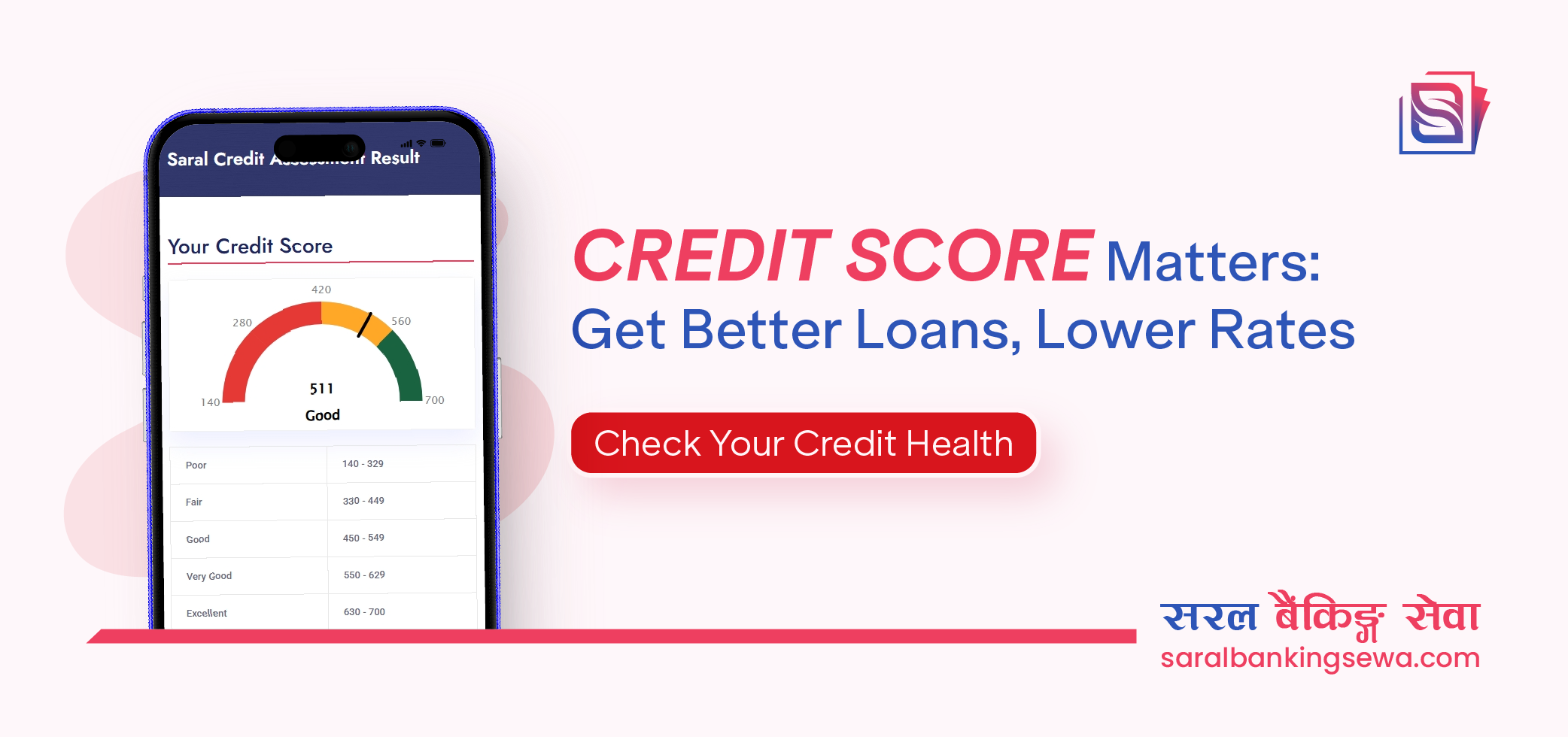
The smart move is to monitor financial readiness proactively before stepping into a bank. Borrowers can easily estimate their eligibility and get a clear picture of their standing by using the Saral Credit Score Checker before submitting a formal application.
However, it is important to note that while this online tool provides a helpful estimate based on self-reported data, the official, legally binding credit history used by commercial and development banks is maintained exclusively by Nepal's CIB.
If your credit history needs improvement, you can rebuild it using these straightforward strategies:
To learn more, read our detailed guide on ways to improve your credit score in Nepal for practical tips to fix your history and secure easy bank approvals.
Planning to take a loan or apply for a credit card? Before submitting an application, it’s worth checking your eligibility to understand whether you meet the basic requirements and avoid unnecessary applications or potential rejection. Learn if you are eligible for a loan or Know Your Credit Card Eligibility through Saral Banking Sewa and make a more informed decision before applying.
Building and maintaining a healthy credit history is a continuous financial journey, but it ultimately unlocks faster processing times and significantly cheaper financing options. In Nepal's banking ecosystem, your credit standing acts as the ultimate gatekeeper, dictating whether a bank approves or rejects your loan application, influencing the premium interest rates you are charged, and even protecting you from being blacklisted.
Do not wait until you are face-to-face with a loan officer to worry about your financial reputation. Take control of your financial future today by checking your credit readiness using the Saral Credit Score Assessment tool, and easily compare interest rates and eligibility across different banks with Saral Banking Sewa.
There is no fixed minimum numerical credit score required by law. Instead, banks look for a clean CIB report, a timely payment history, and assurance that your name is not on the official blacklist.
No, individual borrowers cannot directly view their official CIB report online via a public website. You must either visit the CIB Nepal office to request a self-inquiry report or ask your commercial bank to pull it for you.
Yes. A poor credit history or active default marks will flag you as high-risk. When this happens, banks will reject your application upfront at the processing gate, regardless of how valuable your property collateral is.
While you cannot access official CIB data directly online, you can use digital platform tools like the Saral Credit Score Checker. By entering your self-reported financial details, the tool calculates a reliable estimate of your loan readiness.
Yes. Missing or delaying your Equated Monthly Installment (EMI) payments by even a few days leaves a negative footprint on your monthly CIB record. A pattern of late payments signals to future lenders that you lack financial discipline.
Absolutely. Signing as a loan guarantor legally ties your financial reputation to the borrower. If they fail to pay or default on their loan, your credit history takes the exact same damage, and you can be blacklisted alongside them.
Yes, but it takes time. You can clear your record by fully settling all past-due amounts, clearing outstanding bills, and consistently paying your ongoing EMIs exactly on time to build up a fresh history of good discipline.
Home loans involve massive amounts and long-term commitments. Checking your credit readiness early allows you to spot and fix any profile errors or old dues, ensuring you get faster bank approval and the lowest possible interest rate premiums.